
Furnished Finder
Furnished Finder, LLCTravel & Local
3.92.17K Reviews
- Version
- 1.9.1
- Installs
- 100.00K
- Age Rating
- Everyone
Screenshots

Our Review of Furnished Finder
 Analysis by Appyee
Finding a place for a month is a very different task from booking a weekend hotel. I noticed that immediately when I tried Furnished Finder, a Travel & Local app from Furnished Finder, LLC. Its focus is furnished monthly rentals, including housing commonly sought by travel nurses, so the experience feels more practical and long-term than a typical vacation-booking app. I would recommend it to someone who needs a livable base for work, training, relocation, or an extended visit rather than a quick overnight stay.
The app is free, and its Everyone age rating makes it approachable for a broad audience. It has built a sizeable audience, with over one hundred thousand installs, and its average rating sits at 3.9 from around four thousand ratings. That combination tells me it is useful to many people, but not completely frictionless for everyone. My overall impression is that its value depends heavily on how carefully you search, communicate, and verify a listing.
What the first search feels like
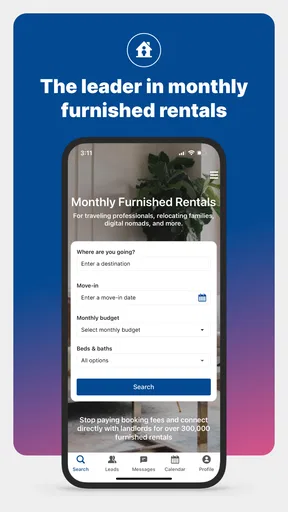
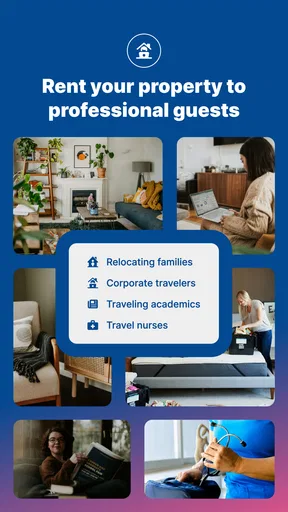
The main appeal is the length of stay. Instead of forcing a monthly renter to adapt a short-term booking platform to a longer housing problem, the app points attention toward furnished places intended for extended occupancy. That makes it especially relevant for travel nurses, medical professionals on temporary assignments, students on placements, contractors, people between homes, and anyone moving to a new area before choosing a permanent address.
I would not approach it expecting the same instant certainty as reserving a hotel room. A monthly rental involves more practical questions: Is the furniture genuinely suitable for everyday living? Are utilities handled in a way that fits the arrangement? How close is the property to the workplace? Is the owner responsive? The app can help you discover possibilities, but the quality of the final decision still depends on the conversation and checks you make afterward.
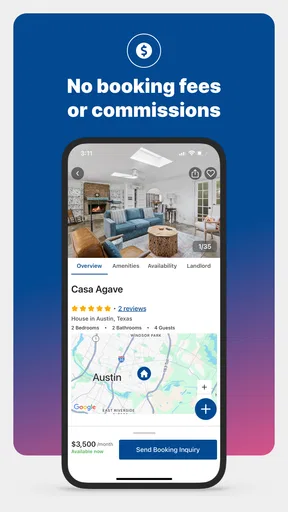
The store summary emphasizes finding monthly rentals without booking fees. That is an important distinction for someone comparing total housing costs, but I would still read every listing and message carefully before making assumptions about the complete amount due. A lower platform cost does not automatically mean a lower overall monthly commitment, because the property’s own terms and expenses matter.
One useful way to think about the app is as a housing-search starting point rather than a replacement for judgment. It can narrow a large location problem into a manageable list of furnished options. It does not remove the need to compare neighborhoods, commute times, house rules, deposits, cancellation expectations, or the practical details that determine whether a place will work for several weeks.
Who will get the most from it
The strongest audience is someone with a defined destination and a reasonably clear time window. If I knew the city, approximate move-in date, and expected length of stay, I could use the app with a concrete purpose. That makes it particularly suitable for a nurse accepting a temporary assignment, a worker starting a project in another city, or a renter waiting for a home purchase or renovation to finish.
It is also useful when a hotel would be uncomfortable or expensive over a longer period. Having a furnished home can make routines easier: cooking, doing laundry, working after a shift, and keeping personal belongings in one place. Those benefits are more meaningful than simply finding the cheapest nightly rate.
I would be more cautious recommending it to someone who needs an immediate, fully guaranteed booking for tonight, or to a traveler who cares mostly about hotel-style services and predictable check-in. Likewise, if you want a short leisure stay with flexible dates, a conventional hotel or vacation-rental service may offer a smoother path. This app is built around a different housing problem.
Setting up a useful search instead of browsing aimlessly
After installing the app, I would begin with the destination and dates rather than scrolling through listings at random. A monthly rental search becomes much more useful when the location reflects the real daily routine. For a temporary worker, that means searching near the facility or job site, not merely inside the correct city. A property that looks affordable can become a poor choice if the commute adds stress every day.
Before contacting anyone, I would write down four requirements: the earliest move-in date, the latest acceptable move-out date, the maximum comfortable monthly budget, and the features that are genuinely essential. This prevents a common mistake in housing searches: treating every attractive detail as equally important while overlooking the one condition that would make the property unusable.
For example, someone working overnight shifts might need a quiet sleeping environment more than a stylish living room. A renter without a car may need practical access to work and groceries. A person bringing a pet should clarify that point before becoming emotionally invested in a listing. The app is more effective when I use it to test a prepared checklist rather than letting photographs define my priorities.
My first practical tip is to keep a simple comparison note outside the app. I would record the listing location, monthly amount, dates, distance to work, included furnishings, questions sent, and response status. This is especially helpful when several properties look similar. Without a comparison method, it is easy to forget which owner confirmed a detail or to compare one property’s headline cost with another property’s more complete explanation.
The developer is Furnished Finder, LLC, and the current version is 1.9.1. The app supports devices running Android 7.0 or later. That makes it accessible to people using older Android phones, although the experience can still vary depending on the device. I would update it when possible and keep my search notes somewhere separate, because housing decisions are too important to depend on remembering everything inside one app session.
Turning the first promising listing into a real lead
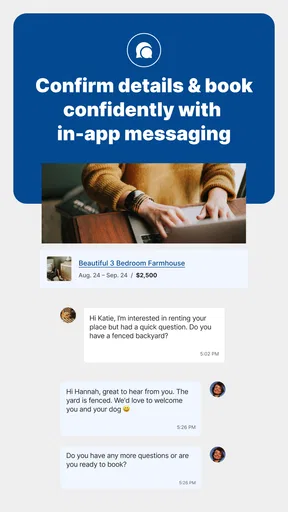
The first meaningful success is not simply opening a listing. It is finding one that fits the dates and starting a clear conversation with the person responsible for it. I would send a short message that introduces my work or reason for staying, gives the exact dates, and asks the most important practical questions in one place. A focused message is easier to answer than a vague request for “more information.”
My message would cover whether the property is available for the full period, what is included in the monthly amount, how move-in works, and whether the sleeping and working arrangements match my needs. I would also ask about internet suitability if remote work is involved, parking if I drive, and any restrictions that could affect daily life. These are not glamorous questions, but they are the ones that prevent unpleasant surprises.
A realistic scenario would be a travel nurse assigned to a hospital for several weeks. I would search close to the hospital, shortlist places that appear furnished, and contact several suitable owners rather than waiting on one response. In each message, I would state the assignment dates and shift pattern, then compare replies based on commute, quietness, furniture, and clarity. The successful action is securing a credible option that fits the assignment, not merely finding the prettiest photograph.
That approach also reveals an important trade-off. Contacting more than one listing improves the chance of finding a workable match, but it takes organization and patience. A highly polished listing is not automatically the best one, and a slower reply may signal a communication problem. I would judge the quality of the exchange as part of the housing decision, not as an inconvenience separate from it.
Another non-obvious tip is to ask questions that invite specific answers. “Is the internet good?” can produce an unhelpful yes. Asking whether it supports the kind of work you need to do creates a clearer conversation. Similarly, instead of asking whether the area is safe in general, I would ask about lighting, access, parking, and the practical route I would use at the hours I expect to travel. Specific questions make comparisons more meaningful.
Where first-time users may become confused
The phrase “no booking fees” can lead a new user to expect a completely automated checkout experience. I would interpret it more carefully: the app’s appeal is avoiding a platform booking charge, while the rental itself still needs ordinary financial and contractual scrutiny. Before agreeing to anything, I would make sure the amount, dates, deposit, included services, and payment expectations are understood in writing.
I would also avoid treating a listing description as a complete inspection. Photos can show the general layout, but they do not answer whether the mattress is comfortable, the building is noisy, the kitchen has the equipment I need, or the neighborhood works for my schedule. If those details matter, I would ask directly and request clarification before committing.
Another source of confusion is the difference between “furnished” and “ready for my particular life.” A furnished room may be perfectly adequate for one renter and impractical for another. Someone traveling with specialized equipment, sharing the space with a partner, or working from home should check the arrangement rather than assuming the label covers every need.
I would also be careful with dates. Monthly housing is less forgiving than a weekend reservation, so I would write the exact arrival and departure dates in every conversation. If my assignment might be extended, I would ask how an extension would be handled before moving in. A property that works for the initial period may not be available afterward.
The app’s 2.2 thousand reviews provide useful evidence that people have varied experiences, but I would not use the overall average alone to decide whether a particular listing suits me. A 3.9 average suggests a mixed but generally usable experience, and individual frustrations may involve search expectations, communication, or a specific housing situation. I would pay more attention to recurring themes relevant to my own needs than to one broad number.
How it compares with familiar alternatives
Compared with hotel apps, Furnished Finder is better aligned with living somewhere for a month or longer. Hotels are often easier when I need instant confirmation, regular service, and a standardized room. They can be less comfortable for an extended stay, especially when I want a kitchen, a residential setting, or a place that feels like a temporary home.
Compared with general vacation-rental platforms, this app has a clearer long-stay purpose. A vacation platform may offer more variety for short trips and leisure-focused browsing, while this service makes more sense when the reason for travel is work, training, relocation, or another extended commitment. The trade-off is that I should expect to do more personal evaluation instead of relying entirely on a polished booking flow.
Compared with traditional apartment searches, the furnished monthly approach can reduce the burden of buying furniture or signing a long lease. That is valuable when my situation is temporary. On the other hand, a conventional lease may be better for someone who wants long-term stability, more control over the home, or a lower recurring cost over many months. The right choice depends less on the app and more on the length and certainty of the move.
I would skip this app if my priority were a fully managed hotel experience, a very short stay, or a permanent unfurnished apartment. I would also pause if I were unwilling to communicate directly and verify details. The service is most convincing when its monthly focus solves a real problem; it is less compelling when the user is simply looking for the fastest possible reservation.
Making the next step safer and more practical
Once I find a promising option, I would slow down rather than rush because the listing feels rare. I would compare at least a few alternatives, revisit the commute, and read the terms line by line. I would keep copies of important messages and make sure the final understanding matches what was originally advertised. For a month-long stay, a small misunderstanding can become a daily frustration.
I would also plan the first day separately from the search. Confirm the arrival time, access instructions, contact method, parking arrangement, and what I need to bring. Even a well-matched property can create stress if the move-in details are vague. Asking these questions before travel is easier than solving them with luggage outside the building.
My strongest recommendation is to use the app as a structured lead generator. Search narrowly, contact several realistic options, ask specific questions, and compare the answers in writing. That workflow turns a broad housing search into a sequence of manageable decisions. It also protects against choosing a property solely because it has attractive photos or appears first in the results.
Furnished Finder is not the right tool for every trip, but it has a clear purpose and serves that purpose better than many general travel apps. Its free access, monthly-rental focus, and relevance to travel-nurse housing make it worth trying for people who need a temporary furnished home. The experience is strongest for organized users who know their dates and are prepared to verify the details.
After using it, I would describe it to a friend this way: install it when your housing need lasts long enough to make a hotel feel wrong, but stay actively involved in the decision. The app can help you reach the right kind of rental; your questions, comparisons, and careful confirmation are what turn that lead into a successful stay. For that audience, Furnished Finder is a practical place to begin, provided you treat the search as housing research rather than an effortless one-tap booking.
Verdict
Strengths of Furnished Finder
- Focused on mid-term rentals for traveling professionals
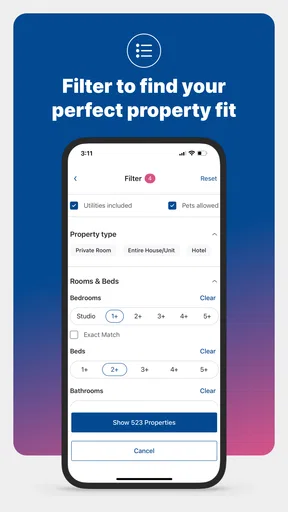
- Useful filters help narrow down suitable furnished housing
- Direct contact with property owners simplifies inquiries
- Listings often include utilities and move-in-ready essentials
- Can be more flexible than traditional long-term leases
Limitations of Furnished Finder
- Availability varies greatly by city and season
- Some listings may have limited photos or incomplete details
- Rental prices can be high in popular medical hubs
- Verification and screening standards may differ between hosts
- Booking usually requires communicating and negotiating off-platform
Similar Picks in This Category
View All
Google Maps
Google LLC3.4

Google Maps Go
Google LLC4.1

Booking.com: Hotels & Travel
Booking.com Hotels & Vacation Rentals4.8

Google Earth
Google LLC3.8

Skyscanner Flights Hotels Cars
Skyscanner Ltd4.8

trivago: Compare hotel prices
trivago N.V.4.4
Frequently Asked Questions
What is Furnished Finder, and who is it designed for?
Furnished Finder is a housing marketplace focused on furnished, medium-term rentals, typically for stays of 30 days or longer. It is especially popular with traveling nurses, healthcare professionals, corporate travelers, military members, relocating families, and students on temporary assignments. The platform helps renters find properties directly from landlords, but it is not a traditional hotel-booking service and availability varies by location.
How does booking a rental through Furnished Finder work?
After creating a profile, you can search by destination, dates, monthly budget, and property features, then contact landlords or property managers directly. Furnished Finder generally facilitates the connection rather than handling every part of the lease transaction. Before committing, you should discuss availability, deposits, utilities, cancellation terms, house rules, and payment procedures with the landlord, and carefully review any lease or rental agreement before signing.
Is Furnished Finder safe and trustworthy for renters?
Furnished Finder provides tools and listing information intended to help renters locate medium-term housing, but users should still perform their own due diligence. Confirm the landlord’s identity, request a video or in-person tour when possible, verify the property address, read reviews and lease terms, and avoid sending money through unusual payment methods. Never assume that a listing is guaranteed simply because it appears on the platform.
How much does it cost to use Furnished Finder?
Costs depend on the property, city, length of stay, and the landlord’s policies. Renters may encounter monthly rent, security deposits, application or cleaning fees, and possible charges for utilities, parking, pets, or additional occupants. Furnished Finder may also offer subscription or membership features depending on the current app and service structure. Always confirm the complete price directly with the property owner before booking.
Can I use Furnished Finder for short stays, pets, or specific housing needs?
Furnished Finder is primarily intended for medium-term housing, so it may not be the best option for a single-night visit or a conventional vacation rental. However, many listings accommodate different schedules, pets, remote work requirements, parking needs, and accessibility preferences. Search filters and listing descriptions can help narrow your choices, but you should contact the landlord to confirm exact dates, pet restrictions, furnishings, internet quality, and accessibility details.
